
Complex Trauma Counselling

Are you caught between overwhelming emotions and feeling numb? Do you feel disconnected from your body, or as if you are one person one day and someone else the next?
You may feel fragmented—confident one day, then powerless or helpless the next—as if different parts of you are pulling in different directions. You may constantly please others while abandoning yourself, or feel broken and unsure whether anything can help.
I offer complex trauma counselling online for adults living with the layered effects of trauma. My approach, the Integrative Trauma Recovery Model™, integrates IFS-informed parts work, somatic and Polyvagal-informed approaches, EMDR, and anti-oppressive practices, adapted to your needs and goals.
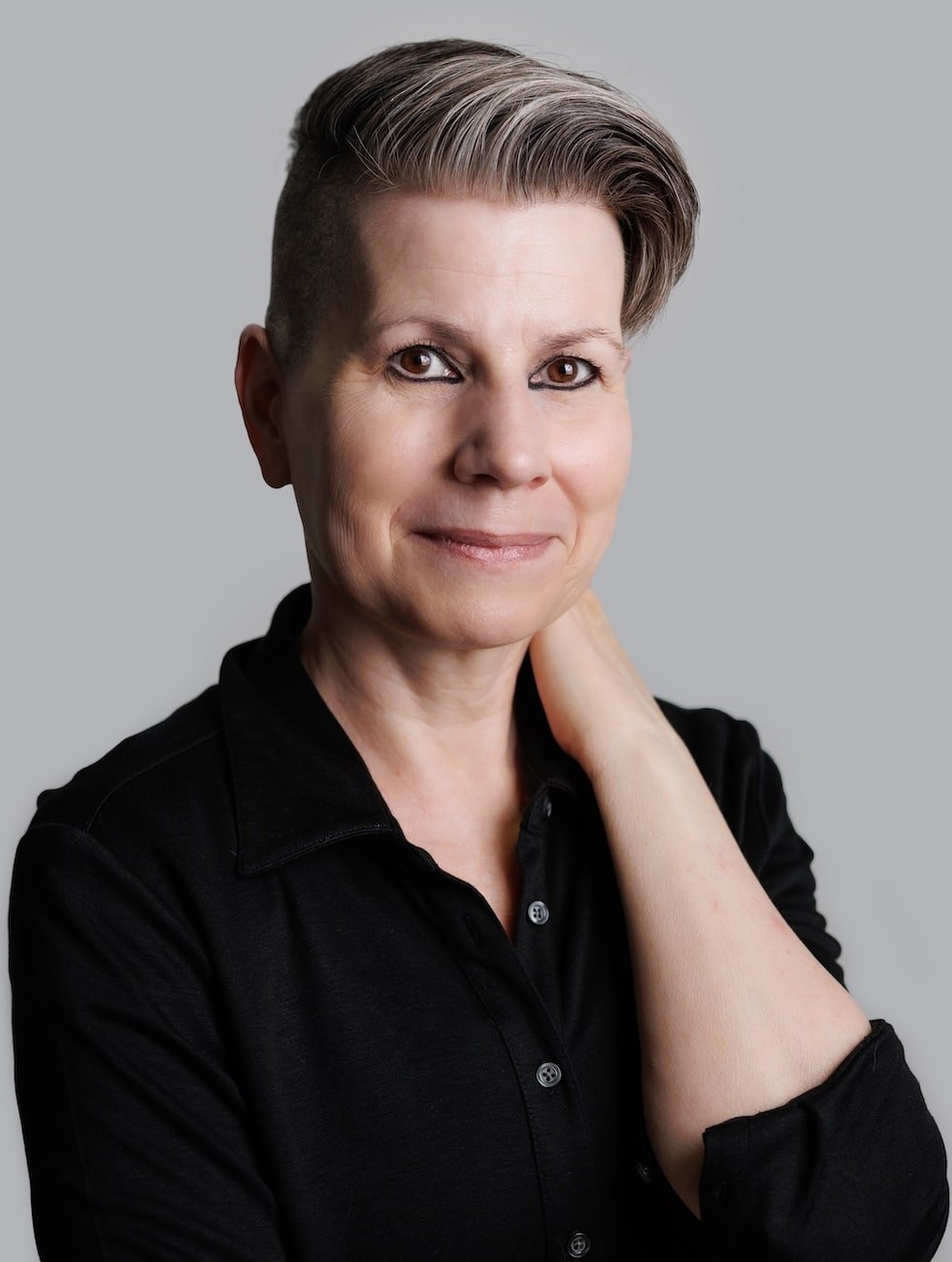
Natalie Jovanic • Trauma Counsellor • Master Therapeutic Counsellor • 15+ Years experience • Integrative Trauma Recovery Model™ • Host, Trauma Demystified Podcast • Specialized training in relational and complex trauma, inner fragmentation, attachment and dissociation.
Who I work with
I work with adults whose experiences involve layered and ongoing relational harm during childhood and adulthood, often alongside systemic harm.
If your difficulties are primarily connected to a toxic adult relationship that you have left, relational trauma counselling may be a better fit.
What you might notice
Complex trauma can affect your mind, body, emotional life, nervous system, sense of self, and relationships with yourself, others, and the world.
You may notice:
Meet Natalie
I’m a trauma counsellor and complex trauma coach with 15+ years supporting adults healing from complex trauma. I combine clinical depth with the embodied experience of recovery from complex trauma. My approach, the Integrative Trauma Recovery Model™, is built on the five principles: healing needs a healthy relationship, context matters, healing follows your pace, recovery isn’t a straight line, and recovery addresses the multidimensionality of trauma.
Complex trauma counselling is available for people in Alberta and Western Canada. If you live outside this area and want to work with me, please reach out. We can explore options. Income-based variable pricing is available.
My integrative approach for healing complex trauma
Complex trauma touches too many aspects — nervous system, emotional landscape, sense of self, relationships, the parts of you that had to adapt to survive — for any single method to reach all. My approach meets that complexity directly, combining what’s needed rather than picking one lane and hoping it’s enough.
Here are the five pillars of my approach:
Recovery is not a straight line
Healing complex trauma is more like peeling an onion, layer by layer. We start where you are and work towards your goals. In the journey, there might be setbacks: like you want to set a boundary and suddenly notice you go into fawn. That’s a signal that we need to look at these parts. Sometimes, we may get stuck. That’s usually a sign that parts are in conflict. We’ll dig deeper to explore these parts and negotiate with them so that you can move forward. Other times, you may notice that you fall back into patterns you have overcome – like your eating gets more disordered, or you shut down more often. We’ll attend to that and explore what activated it. It may feel like a setback, but it usually is not. Maybe there is more stress, maybe the specific context is new; it’s just something unknown we need to understand and integrate first.
Healing follows your pace
We build the process together, and it starts with our relationship. You are allowed—and welcomed—to have and communicate your fears, concerns, and inner experience. We usually start with getting to know your system and helping it stabilize.
I provide psycho-education about the nervous system and complex trauma, not to tell you how you feel, but to explore what resonates. Together, we will understand that what you carry helped you survive, even if it feels unbearable or stigmatized at times.
Then we’ll collaborate to find practices and tools to stabilize your system. We look for small improvements, not rapid changes. Somatic practices are often not an all-or-nothing approach. Many clients have parts that are scared to be in the body. We don’t force them to get there. We try to understand their fears and explore how we can increase safety. If parts dissociate, we explore what activated them and work with that. Progress can be 5%, not zero to 100%. Sometimes progress is simply noticing that you’ve dissociated.
We also explore your concerns and questions. Healing often means jumping into the unknown. It’s natural to have questions, and I’ll answer them. I’ll also bring my own observations, ideas, and concerns along the way. This isn’t me just trailing behind what you already know; it’s two people thinking about your healing together.
Recovery addresses the multidimensionality of trauma
Complex trauma affects your body, mind, nervous system, emotions, sense of self, and your relationships. For many people, these symptoms are caused by inner fragmentation: an adaptive pattern when our brain split into apparently normal parts and emotional parts that are often hidden behind a wall. These are adaptive responses that allowed you to survive. We work with them, not against them.
These layered and connected symptoms often don’t heal by talking about them. It’s about working with them. Inner fragmentation is often better addressed with somatic parts work; nervous system regulation with a combination of skill building, somatic practices, parts work, and grounding. Building boundaries is essential throughout our collaboration. Boundaries and a sense of self develop hand-in-hand.
We look for gradual improvement, not quick fixes. EMDR can be complicated when it comes to complex trauma. If you had past bad experiences with it, we will explore them to learn from them. I’ll give you the options and be transparent about the risks and benefits so you can make an informed choice. Read more: IFS or EMDR for complex trauma.
Context matters
My approach also integrates anti-oppressive practices, recognizing that for many people, complex trauma is developmental or systemic: the ongoing weight of oppression that couldn’t be escaped. I hold myself accountable to this. You can read my full Inclusive Trauma Recovery framework to see exactly how I approach this.
I’ll also recognize and acknowledge abusive or toxic relationship dynamics. Complex trauma is often relational, though triggers are rarely only about the past. It’s about building the skill to discern healthy from toxic relationship dynamics, learning to set healthier boundaries, becoming assertive—and sometimes learning to walk away if the relationship is harmful for you. I won’t tell you what to do, but we’ll collaborate so that you can make the choice that’s best for you.
Healing needs a healthy relationship
For complex trauma specifically, I believe the therapeutic relationship itself is part of what heals. So, I show up honestly, not from behind a blank slate. Our relationship matters to me. Some of my clients have experienced harm by past therapists. I won’t erase the harm, but I hope we can work through it in our collaboration. If parts of you don’t trust me, that makes sense. I don’t need them to change. My hope is that you learn to trust yourself. I want to understand your concerns.
And if we have a conflict, I stay present, hear your position, and respect it. If you communicate a boundary, I respect this. I repair if I made a mistake. I get that our relationship isn’t neutral if we have a difference in privilege. I intend to work consciously with my privilege. I am committed to creating a healthy relationship with you, so it doesn’t replicate how you’ve been wounded before.
If you’d like to understand more about how this model works and whether it might be the right fit for you, read: Trauma Counselling: How I Practice and What You Can Expect.
If this resonates with you, we can start small. Your next step is a free consultation to see whether my approach feels right for you.
What becomes possible with complex trauma counselling
A self not organized around survival
Your sense of who you are can rebuild, not fitting into what society wants from you, but more fully yourself.
A caring adult, from the inside
An internal presence that can hold space for every part of you, wounded or unwelcome elsewhere.
Boundaries you can hold
Not a technique, but a felt sense of where you end and someone else begins. Parts holding trauma responses around boundaries will soften with time.
Overwhelming emotions that become more manageable
With parts work and somatic practices, you’ll be able to understand your inner world and manage overwhelming emotions, shutdown, or other difficult patterns.
Memories that lose their charge
Through parts work, EMDR and somatic approaches, what’s lived in the body for decades can finally integrate. This won’t be a quick fix for complex trauma. It’s a paced process that works with your body.
Some clients have told me they were finally able to heal after years of talk therapy, because they didn’t feel judged or treated as a pathology here. Healing complex trauma isn’t a quick fix — but it is possible.

It’s your time to heal: Let’s begin
If this resonates, your next step is simple: a free consultation to see whether this approach feels right for you. We’ll map out gentle first steps together. No need to dive straight into the most painful memories. Book through Jane.app or message me at nat@brighthorizontherapies.com.
Your complex trauma counselling questions answered
If you’re curious to learn more about trauma recovery at your own pace, you’re welcome to explore my Trauma Recovery FAQs.