
Childhood Trauma Coaching for Adults
Online worldwide

Build a life shaped by who you are—not by who you had to become to survive.
Was your caregiver frightened or frightening? Do you feel that something was off in your childhood, but can’t remember exactly what happened?
Many childhood trauma survivors I work with don’t have clear memories of their early experiences. Instead, they notice patterns in the present: difficulty trusting themselves, feeling responsible for other people’s emotions, an inner critic that never lets up, or struggling to know what they need.
I offer childhood trauma coaching for adults who want to heal from dysfunctional family dynamics, emotional, physical or sexual abuse, neglect, or growing up with emotionally absent parents. You don’t need to remember what happened, or to know whether it was “bad enough,” to begin healing.
Natalie Jovanic • Complex Trauma Coach • 15+ years’ experience • Integrative Trauma Recovery Model™ • Host, Trauma Demystified Podcast • Specialized training in parts work for relational and complex trauma, somatic healing, and attachment.
Is this you?
You may have known for years that something was wrong at home. Or you may have spent most of your adult life believing you had a normal childhood and only recently started to wonder.
Childhood trauma doesn’t always announce itself. Some people reach adulthood without a clear account of what happened in their family, while others remember their childhood vividly but are still struggling to understand its effects.
Perhaps you were told, growing up, that you were exaggerating, that it wasn’t that bad, or that you should be grateful. That can make it difficult to take your own experience seriously and is often part of why people wait so long before looking for support. Maybe you quietly believe you’re broken, and you’re afraid of what it would mean to be seen that way.
You may have talked about your childhood before, but haven’t found an approach that helps you change what you’re still experiencing today.
You may also be concerned about passing on patterns from your childhood. Perhaps you notice yourself reacting in ways that remind you of your parents, or worry that your past could affect your own children.
If any of this sounds familiar, it doesn’t mean something is wrong with you. It means something happened — and it can be worked with.
What you may be working toward
This work isn’t about erasing your childhood or getting everything right. It’s about having more room to be yourself — not only the version of you that learned to survive your family.
A stronger sense of who you are
If you grew up adapting to what was needed around you, you may have had to disconnect from who you are. The self receded since there was no room for it to be seen. It may feel like it’s gone. It isn’t. Part of this work is noticing the moments it surfaces and giving it more room than the roles you had to take on.
More choice in difficult moments
Reactions that once helped you survive as a child can fire with intensity in your current life — especially around criticism, authority, conflict, abandonment, withdrawal or someone’s disappointment. When that happens, you may notice yourself doing things you don’t want to do. We can explore what those moments activate and work toward more choice so you can respond how you want.
Boundaries that hold
Many people who grew up in unsafe or unpredictable homes learned that limits were dangerous, or that they had no right to have any. It helps to look at what’s getting in the way: guilt, fear of conflict, fear of losing the relationship, that limits are selfish, or freezing when you try. From there, the work is concrete: notice what your body is telling you about a limit, find words that express it, and learn to stay with yourself when the other person responds badly. Boundaries are a way to practise self-respect and, if nobody taught you to tell abuse from love as a child, to begin challenging what you learned.
Relationships with less self-abandonment
You may begin to see how early loyalties and roles show up in your adult relationships: the peacemaker, the caretaker, the one who never needs anything. The goal isn’t to change the other person. It’s to notice when you are in a survival pattern that doesn’t serve you in relationships, so that you can connect more deeply with yourself and express what you actually feel and want.
A different relationship with your past
With time, memories and body responses lose their power over your present. You don’t need to revisit everything, and you don’t need to start with the most painful memories. Many people also find they need to grieve the childhood they didn’t. That grief is a natural part of healing.
An internal relationship with your younger parts
As an adult, you can become someone your younger parts can turn toward — not to relive what happened, but to offer what wasn’t available then: someone who takes their fear seriously and doesn’t ask them to be different. This develops gradually, and it isn’t about parenting yourself alone.
Creating healthier patterns for the next generation
If you’re a parent or hope to be one, you may want to understand how your history shows up in your relationships. Our collaboration can offer space to explore ways of relating that feel more intentional and aligned with the care you want to offer.
These are possible directions, not obligations. Your pace, goals, and circumstances shape what the work looks like.
Meet Natalie
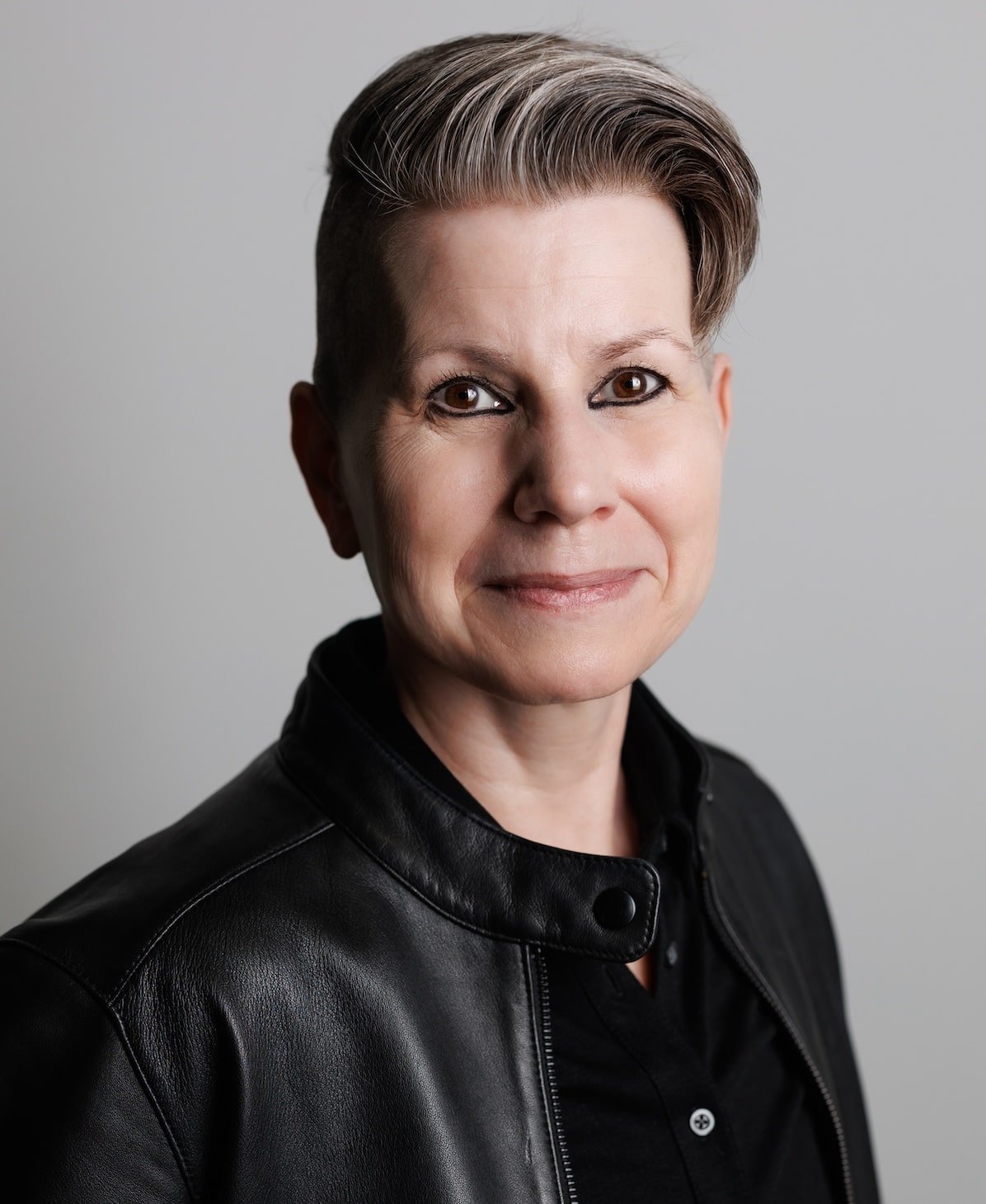
I’m Natalie Jovanic, a trauma counsellor and Complex Trauma Coach with more than 15 years’ experience supporting adults as they heal from childhood trauma. My training includes relational and complex trauma, parts work, somatic healing, inner fragmentation, attachment, and EMDR.
I developed the Integrative Trauma Recovery Model™ from my professional training, my work with clients, and more than 30 years of my own recovery from childhood trauma. I know from experience that healing isn’t a straightforward process, and that it takes courage to keep showing up. These experiences shape how I understand this work, including its limits.
I’m based in Canada and offer childhood trauma coaching online to adults worldwide. Variable pricing based on income is available.
How we work together
Healing childhood trauma isn’t something where I tell you what to do. It’s a collaborative process. You choose your goals, have choices throughout, and help shape the direction of the work.
What I bring
I create a relational space where I model healthy relationship behaviours and demonstrate healthy use of power. I hope that this gives you opportunities to experience different ways of relating. I invite you to practise expressing yourself, raising concerns, setting boundaries, or disagreeing with me. I don’t expect you to trust me or feel safe around me. I want you to learn to trust yourself. When I notice patterns, I’ll share my observations, and you can check in with yourself about whether they feel true to you.
I use different elements of the model depending on your goals, needs, and what you notice in your body. Making sense of your childhood is one aspect of healing. I’ll share psychoeducation to increase your self-awareness and identify patterns. We’ll approach these patterns as parts of you, not as your whole identity. You’ll develop ways to approach your parts when you can, and tools to support yourself when you can’t — so that overwhelming experiences don’t leave you without options. There is no prescribed sequence. The process looks different for each person.
Your inner experience matters more than any tool or theory. I’m curious about your perspective and your inner process. I’ll also gently challenge you when I see an opportunity to take a further step in your healing, while respecting your choices.
I also bring the Integrative Trauma Recovery Model™, a non-pathologizing framework I developed for adults healing from childhood abuse, neglect, and trauma. It recognizes how childhood trauma affects the different dimensions of a person’s life, including the body, emotions, sense of self, relationships, and social context. It draws on IFS-informed parts work for childhood trauma, somatic and Polyvagal-informed approaches, structural dissociation theory, EMDR for childhood trauma, and anti-oppressive practice.
How you participate
You’re not a passive recipient of interventions. You shape the work by noticing and sharing what happens internally, questioning patterns that no longer serve you, experimenting with different approaches and assessing whether they work for you, practising boundaries and different ways of relating, and speaking up when something between us doesn’t feel right.
You can bring your whole experience here, including fears, difficulties, uncertainty, and parts that don’t trust me yet. A part that watches me carefully or waits for me to prove myself makes sense given what you’ve lived through. I want to hear this part and understand its concerns and questions. You don’t have to leave it at the door, and you don’t have to talk it out of protecting you.
My role
You are the expert in your life. My role isn’t to teach you to trust me or to rely on my interpretation of your experience. It’s to support you in trusting yourself, strengthening your agency, and becoming increasingly able to navigate difficulty without depending on me.

Start with one conversation
You don’t need to have it all figured out to start, or to explain everything that happened before you reach out. In a free consultation, we can talk about what’s happening now, what you hope might be different, and whether this approach feels like a fit.
Or email me at nat@brighthorizontherapies.com.
Your questions about childhood trauma coaching for adults answered
If you’re curious to learn more about trauma recovery at your own pace, you’re welcome to explore my Trauma Recovery FAQs.