
Healthy Boundaries Coaching

If you grew up in a home where your needs were dismissed, your feelings were minimized, or your boundaries were routinely violated, learning to set healthy boundaries as an adult can feel almost impossible. You may struggle with saying “no,” feel guilty for prioritizing yourself, or find yourself in relationships where you give endlessly while receiving little in return. These aren’t character flaws—they’re adaptations you developed to survive an environment where boundaries weren’t safe or allowed.
Healing your relationship with boundaries is an essential part of recovering from childhood trauma and relational trauma. Through trauma-informed coaching grounded in the Integrative Trauma Recovery Model™, you can learn to recognize your limits, communicate your needs without guilt, and build relationships based on mutual respect rather than self-abandonment. This work addresses not just the skill of boundary-setting, but the deeper wounds that make boundaries feel dangerous, impossible, or selfish.
Is this you?
You can’t say “no” without crushing guilt
You find it nearly impossible to say “no,” even when you’re exhausted, overwhelmed, or being asked for something that crosses your limits. The word feels stuck in your throat, and when you do manage to say it, you’re flooded with guilt, anxiety, or fear of rejection.
You over-give until you burn out
You over-give in relationships, whether romantic, familial, or professional, often to the point of burnout or resentment. You prioritize everyone else’s needs above your own, and when you finally try to assert yourself, you’re met with pushback that makes you question whether you even have the right to boundaries in the first place.
You’ve lost touch with your own needs
You struggle to identify what you actually need or want because you’ve spent so long tuning into others’ needs that your own internal compass feels broken. You may absorb others’ emotions easily, finding it difficult to separate what you feel from what others are feeling.
You stay in relationships that hurt you
You might stay in toxic or one-sided relationships far longer than feels healthy because leaving feels impossible, or because you’ve convinced yourself that your needs don’t matter as much as keeping the peace. Perhaps you experience chronic guilt when you take time for yourself, or you find yourself constantly explaining, justifying, or apologizing for having needs at all.
You’re repeating familiar patterns
You may notice that you’ve recreated dynamics from your childhood—whether with partners, friends, bosses, or even your own children—where your boundaries are consistently overridden or dismissed.
You give more than you have to give
If you’re a caregiver, parent, helping professional, highly empathetic person, or someone in a marginalized community navigating microaggressions and systemic oppression, the challenge of maintaining boundaries may feel even more complex. You give so much of yourself that there’s little left for you, and the idea of protecting your energy feels selfish or impossible.
These struggles aren’t weaknesses. They’re the legacy of growing up in an environment where boundaries weren’t modeled, respected, or safe to have. Healing is possible, and it starts with understanding that you have the right to take up space, have needs, and protect your wellbeing.
What you can gain from healthy boundaries coaching
Genuine self-worth and self-respect
You’ll develop a genuine sense of self-worth and self-respect, finally believing deep down that your needs matter and that you deserve to protect them. This isn’t just intellectual understanding—it’s embodied knowing that transforms how you move through the world.
clear, confident communication
You’ll learn to identify and communicate your boundaries with clarity and confidence, without the crushing guilt or fear that once held you back. You’ll discover that setting boundaries doesn’t mean being selfish or unkind; it means being honest, respectful, and authentic.
deeper, more authentic relationships
As you develop healthier boundaries, you’ll notice your relationships transform. Instead of surface-level harmony built on self-abandonment, you’ll experience genuine connection where both people can be themselves. You’ll be able to stay present with difference and disagreement without needing to fix, control, or collapse. Some relationships will deepen as you bring more of your authentic self, while others may shift or end—and you’ll have the clarity to recognize which relationships can hold the real you. Boundaries don’t distance you from people; they create the safety that allows real intimacy.
greater emotional resilience
Your emotional resilience will grow as you learn to navigate pushback, manage the discomfort that comes with change, and stay grounded in your values even when others react negatively. You’ll build the capacity to handle challenging situations without abandoning yourself or reverting to old patterns of people-pleasing and self-sacrifice.
better mental and emotional wellbeing
Perhaps most importantly, you’ll experience better mental, emotional and physical wellbeing. The chronic stress, anxiety, and exhaustion that come from constantly overriding your own needs will begin to lift. You’ll have more energy, feel more present in your life, and create space for joy, rest, and authentic connection.
breaking intergenerational cycles
You’ll be able to model healthy boundaries for the people in your life—your children, your partners, your friends—breaking the intergenerational cycle and creating a new legacy.
If this resonates, I would like to offer free consultation to explore how I can support your healing journey.
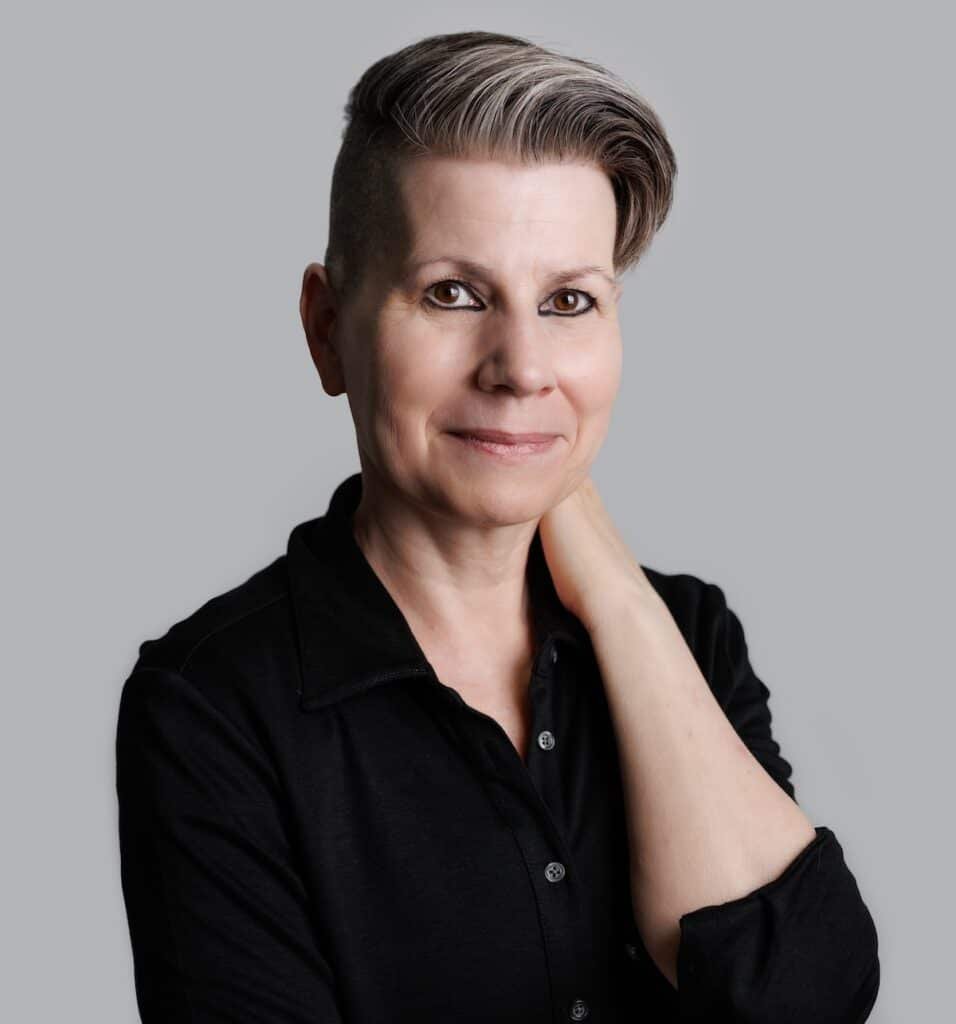
Meet Natalie
Hi, I’m Natalie , a trauma counsellor and coach with over 14 years of experience supporting people healing from trauma, complex trauma, and childhood abuse. My approach integrates best practices for trauma recovery, including EMDR, IFS-informed parts work, and Polyvagal Theory — always adapted to your unique needs.
I believe healing should be safe, inclusive, and rooted in social justice, so I integrate anti-oppressive practices into my work. I also offer a flexible pricing scheme to make trauma counselling more accessible. I’m here to support you at your own pace and help you reconnect with your inner strength.
My Approach: Boundaries Through the Integrative Trauma Recovery Model™
Boundary work, when done through a trauma-informed lens, goes far deeper than learning scripts or practicing saying “no.” The Integrative Trauma Recovery Model™ recognizes that boundary difficulties are rooted in nervous system dysregulation, attachment wounds, and survival adaptations that once kept you safe.
Healthy boundaries aren’t about saying “no” more often—they’re about creating a container where authentic relationship becomes possible. When you have boundaries, you can tolerate difference, own your experience without making others wrong, and stay connected even when things are challenging. We work toward boundaries that allow warmth, presence, and genuine intimacy—not isolation or self-protection from connection.
We work with your body, not just your mind. Many adults with childhood trauma carry deeply ingrained nervous system patterns that signal danger when they attempt to set boundaries. Your body may respond to boundary-setting with panic, freeze, or fawn responses because, in your early life, having boundaries wasn’t safe. Through somatic practices and polyvagal-informed work, we help your nervous system learn that it’s safe to have limits now.
We address the internal parts of you that hold different beliefs about boundaries—the part that desperately wants to say no, the part that’s terrified of abandonment, the part that learned early on that your needs don’t matter. Using IFS-informed parts work, we create internal alignment so that setting boundaries becomes less conflicted and more authentic.
We also examine the relational and systemic contexts that shape your boundary challenges. If you’re navigating oppression, marginalization, or complex family dynamics, we acknowledge these realities and work with them rather than pretending boundaries exist in a vacuum. My approach honors your lived experience and supports you in finding empowered, contextually-aware ways to protect yourself.
This work is collaborative and paced to your nervous system. You are the expert on your life, and together we’ll build the skills, awareness, and inner resources you need to create and maintain boundaries that truly serve you.
It’s your time to heal: Let’s begin
If this approach to healthy boundaries coaching resonates with you, I’d be honoured to get to know you. I offer a free consultation so you can explore your options in a safe, supportive space. You can book through my secure online booking system or message me at nat@brighthorizontherapies.com—whatever works better for you.
Your healthy boundaries coaching questions answered
If you’re curious to learn more about trauma recovery at your own pace, you’re welcome to explore my Trauma Recovery FAQs.