Healthy Boundaries Quiz: A Starting Point for Self-Reflection
This healthy boundaries quiz gives you a snapshot of your current boundary-setting skills — where you feel confident, and where there might be room to grow. It’s a tool for self-reflection, not a diagnostic instrument. What it can do is help you get curious about your patterns — and point you toward areas worth exploring.
I designed it with a specific kind of person in mind: someone who suspects their relationship with boundaries is connected to something deeper than just not knowing the right words to say. If that’s you, you’re in the right place.
A few things worth knowing before you begin
If you have experienced childhood trauma or abuse
Boundaries and trauma are deeply connected. If you grew up in an environment where setting a boundary wasn’t safe — where it led to conflict, punishment, or withdrawal — your nervous system learned to protect you in other ways. People pleasing, avoiding conflict, and not recognizing violations in the first place. These aren’t character flaws. They’re adaptive responses that made sense in the context where they developed.
This means your score may reflect not just your current skills, but the protective patterns you learned a long time ago. Be gentle with yourself as you read your results.
If you belong to a marginalized group
If you are 2SLGBTQ+, Black, Indigenous, a person of colour, an immigrant, or living with a disability, communicating boundaries can carry real risk depending on the relationship or environment. Psychological safety depends on context — and power is part of that context. Your score can’t account for that complexity. You can.
If you are currently in an abusive relationship
Setting and maintaining boundaries in an abusive relationship is a different challenge entirely. If this is your situation, please prioritize your safety above any insight this quiz might offer. You are not responsible for another person’s harmful behaviour — only for the boundaries you set when it is safe enough to set them.
How to take the healthy boundaries quiz
Answer honestly and take your time. There are no right or wrong answers — just your current experience. Healthy boundaries are a growth journey, not a destination, so wherever you land is a valid starting point.
At the end, you have two options:
Option 1 — Print your results. No email required. Your results stay with you.
Option 2 — Enter your email to receive your results and a short series of resources that go deeper — articles, reflective prompts, and practical guidance to help you strengthen your boundaries over time. You can unsubscribe at any time.
Choose whichever feels right for you.
A note on your results in the healthy boundaries quiz
Healing isn’t about having perfect boundaries — but finding the most empowered place for yourself in a complex world.
These statements are written as ideals — a direction to move toward, not a standard to measure yourself against. In reality, even people who have done years of deep healing work don’t live all seventeen of these consistently. The people they are in a relationship with may not be at the same level. Context matters enormously.
For those navigating systemic pressures — as Black or Indigenous folks, queer folks, immigrants, as people whose identity isn’t fully accepted by the dominant culture, as anyone in a relationship where power isn’t equal — some of these statements carry real costs that self-work alone can’t resolve.
Not compromising your values and integrity is possible. But it can also mean losing relationships, and that loss is real. Relationships always consist of two people, and sometimes there’s a delicate balance between practicing healthy boundaries and deciding who you want to be in a relationship with. There is no right or wrong way. Healing doesn’t mean that we always have the ideal boundaries — but that we can make conscious choices about what we want in our lives rather than being stuck in automatic patterns.
What your score means
Wherever you landed — this is your starting point. Boundaries are a journey of growth, not a destination. Each step matters, and we all start where we are.
Healthy boundaries quiz scores
Building your foundation (score 17 or below)
You may be at the beginning of your boundary journey — and that’s a completely valid place to be. Many people arrive here after years of not having boundaries modelled or after relationships where their limits weren’t respected. Starting here doesn’t mean you’re behind. It means you’re beginning — and that takes courage.
Growing awareness (score between 18 and 43)
You have some awareness of your boundaries and are developing your skills. There are likely areas where you feel more confident and others where you notice room to grow. This is where most people are — and it’s rich territory. The work here is to get curious about the patterns that get in the way and build on what’s already working.
Empowered boundaries (score 44 and above)
You’re practicing healthy boundaries with some consistency. That doesn’t mean the work is done — boundaries evolve as we heal and as our relationships change. The invitation here is to notice what has helped you reach this point, and where you want to go deeper.
What your score can and can’t tell you.
Your score in the healthy boundaries quiz gives you a starting point — a snapshot of where you are right now. What it can’t capture is the complexity behind it: how childhood experiences shaped your patterns, the relationships or environments where setting a boundary carries real risk, or how hard you’ve already worked to get here.
The most useful questions to sit with aren’t about your number. They’re: what areas do I want to strengthen? How would my life be different if I did? And what might be getting in the way?
You’re doing this work to explore how your life might be better, your relationships more honest, and your relationship with yourself more grounded.
If you’d like support putting this into practice, I offer healthy boundaries coaching.
Want to dig deeper?
How to Build Healthy Boundaries after Childhood Trauma: Why boundary work starts in the body and nervous system before it ever reaches words, and the eight interconnected pillars — from working with protective parts to harm reduction when direct boundaries aren’t safe.
Boundaries in Relationships: Why it Starts with your Body: What boundaries actually are and whey they’re somatic before they’re rational.
Communicating Boundaries: What I Wish Someone Had Told Me: Practical and honest guidance on how to actually say it.
It’s Not a Bad Habit: A free guide exploring the patterns that make boundary work hard and where they actually come from.
Sources
Center for Right Relationships (2012). Organization & relationship systems coaching training [in-person training curriculum]. Center for Right Relationships.
Riso, W. (2006). Los límites del amor: Hasta dónde amarte sin renunciar a lo que soy [The limits of love: How to love without renouncing who I am]. Editorial Norma.
Whitfield, C. L. (2010). Healing the child within: Discovery and recovery for adult children of dysfunctional families (Recovery Classics Edition). Simon & Schuster.
Katherine, A. (1994). Boundaries: Where you end and I begin: How to recognize and set healthy boundaries. Hazelden Publishing
Disclaimer: This content reflects my professional knowledge and experience and is intended to educate and support. It may not apply to every situation, and I don’t know your specific context. If you feel stuck, notice symptoms that limit your ability to participate in daily life, or experience worsening distress, I encourage you to reach out to a qualified mental health professional for individualized support.
Unsure where to go? Start with:
Healing trauma: What recovery actually requires: the phases, the approaches and why healing isn’t about coping forever.
Healing childhood trauma as an adult: What childhood trauma looks like in adulthood, why the effects don’t just go away, and what healing actually involves — from someone who has lived it.
About Natalie

I’m Natalie Jovanic, a trauma counsellor and complex trauma coach with over 15 years of experience in complex, childhood, and relational trauma. I bring together clinical depth and the embodied experience of full recovery. I developed the Integrative Trauma Recovery Model™ to support more than symptom relief — helping people restore relational health, rebuild self-trust, and reconnect with vitality in their lives. I also host the podcast Trauma Demystified.
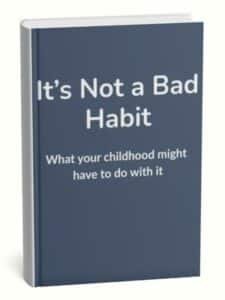
If you’re noticing patterns you can’t seem to change, this guide may help you understand why.
About my approach
My writing reflects my training, lived experience, and how I practice. I share what I believe represents best practice in trauma recovery — and I always encourage you to notice what feels right for you.